Home » Archives for 2025

What’s the total timeline from concept to opening for a medical office building?

In most U.S. markets, plan for roughly 24–36 months from concept to opening for a 50,000–150,000 SF medical outpatient building (MOB), spanning preplanning and entitlements (6–9 months), design and procurement (8–12 months), construction (12–18 months), and commissioning and occupancy (1–3 months), with variation driven by AHJ review, delivery model, and long-lead materials. Why it matters Time-to-market directly affects revenue capture, physician alignment, and capital efficiency. Each month of delay defers clinic volumes, imaging throughput, and downstream referrals—eroding the project’s net present value. Elevated interest rates also increase carry costs during development, putting a premium on disciplined schedules and early risk mitigation. The Federal Reserve’s H.15 data underscores how rate environments shape the cost of capital, which compounds across multi-year projects. A realistic, front-loaded schedule protects ROI by sequencing entitlements, design, procurement, and construction in a way that prevents idle time. It also clarifies when to activate physician recruitment, equipment purchasing, and payer notifications so clinical and operational go-live align with substantial completion. In Middle Tennessee, for example, differences between Nashville Metro and suburban jurisdictions can materially affect preconstruction timeline assumptions. How it [...]

2025-12-04T08:32:20-06:00December 4th, 2025|Blog|0 Comments

How do you decide where to build your next ambulatory care facility?

How do you decide where to build your next ambulatory care facility? Use a data-driven, stepwise process that aligns service-line strategy with market demand, regulatory constraints, capital costs, and delivery timelines—validated by clear financial thresholds, site criteria and service line analytics for any given location. Why it matters Ambulatory care has been steadily gaining share as procedures migrate out of the hospital, putting a premium on the right locations for access, payer mix, and growth. National healthcare real estate analyses show resilient demand for outpatient space and continued expansion of physician-aligned facilities, making poor siting decisions costly and hard to unwind. Independent market evidence indicates that systems capturing outpatient shifts earlier tend to defend referral channels and reduce leakage, improving downstream contribution margins in acute settings. JLL Healthcare Real Estate Outlook At the same time, the cost of capital remains elevated compared to the pre-2022 era, so every project must clear stricter hurdle rates and timing risks. The Federal Reserve’s target federal funds rate reached 5.25%–5.50% in 2023, and rate conditions continue to influence borrowing costs and discount rates used in real [...]

2025-12-04T08:28:44-06:00December 4th, 2025|Blog|0 Comments

Bremner Healthcare Real Estate Celebrates Grand Opening of New State-of-the-Art Medical Office Building

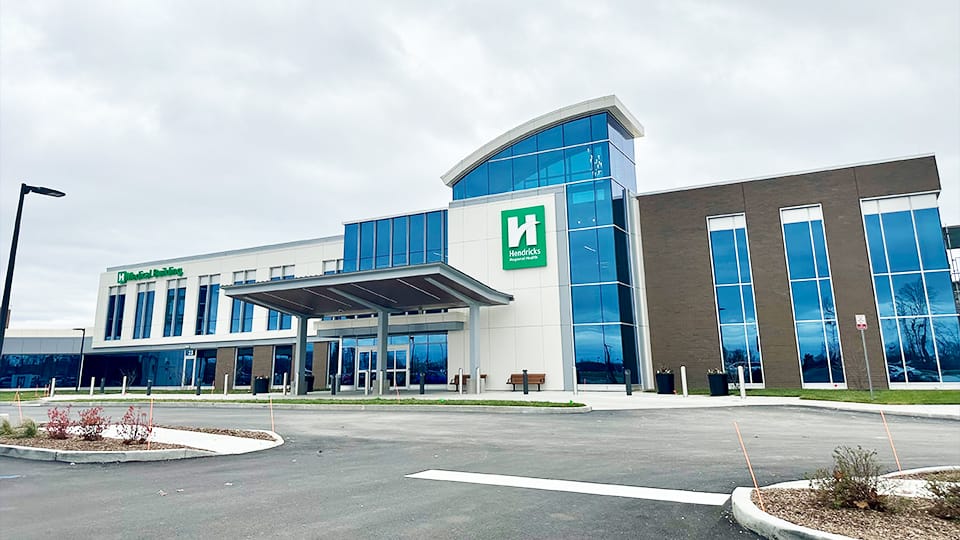
Bremner Healthcare Real Estate is proud to announce the grand opening of a new state-of-the-art medical office building on the Hendricks Regional Health Brownsburg Hospital campus. The completion of this multi-specialty outpatient facility marks a significant milestone in expanding high-quality, accessible healthcare services for residents on the growing northwest side of the Indianapolis metropolitan area. Located at the northwest corner of I-74 and Ronald Reagan Parkway, the new medical office building brings together a diverse range of clinical specialties and modern outpatient services to meet the region’s rapidly growing healthcare needs. The facility reflects a shared commitment between Bremner Healthcare Real Estate and Hendricks Regional Health to elevate patient experience, enhance access and support long-term community well-being. “We are thrilled to celebrate this major investment in Brownsburg’s healthcare infrastructure,” said Kevin Knue, Executive Vice President at Bremner Healthcare Real Estate. “From concept to completion, this project represents the strong partnership we share with Hendricks Regional Health – one centered on innovation, sustainability and improving access to care for the people who call this community home.” The new building complements the existing Hendricks Regional [...]

2025-12-04T09:44:24-06:00December 3rd, 2025|News|0 Comments

How long do Certificate of Need approvals add to healthcare development timelines?

How long do Certificate of Need approvals add to healthcare development timelines? In most states, Certificate of Need (CON) approvals add 3–12 months to a healthcare project, and 12–24 months if the application is challenged or appealed; plan for 90–120 days of pre-filing preparation plus the state’s review and potential hearing schedule. Why it matters Timeline is critical. A 40,000 SF ambulatory surgery center projected to generate $2.0–$3.0 million in annual EBITDA forfeits roughly $165,000–$250,000 for every month opening is delayed. Meanwhile, construction inflation of 4–6% annually (0.3–0.5% per month) and interest carry on predevelopment spend compound the cost of waiting. CON delays also disrupt strategic sequencing. Missing a market window can cede first-mover advantage to a competitor, force physicians to extend expiring leases, and push projects into tighter labor or materials markets that increase total project cost by 5–10%. How it works Most CON processes follow a predictable path: pre-application planning (60–120 days), submission, completeness review (2–4 weeks), staff review (60–120 days), public comment/hearing (as scheduled), decision (within 30 days of hearing), and potential appeal (3–12 months). Batch cycles in some [...]

2025-11-17T12:13:11-06:00November 17th, 2025|Blog|0 Comments

How do you minimize disruption to existing operations during facility expansion?

How do you minimize disruption to existing operations during facility expansion? You minimize disruption by sequencing construction in phases, creating swing space, scheduling off-hour work for noisy or invasive activities, and tightly managing shutdowns through infection control and life safety protocols. Why it matters Construction inside an operating clinic can reduce access, frustrate patients, and depress provider productivity if not carefully planned. A 20,000 SF multi-specialty clinic seeing 120 visits per day at a $70–$100 contribution per visit can forfeit $42,000–$60,000 in margin with just one week of downtime. Disruption also compounds staffing risk. Noise, dust, detours, and unpredictable utility interruptions increase burnout and turnover, while unclear wayfinding harms patient experience scores and referral confidence. How it works Start with an operational baseline and critical thresholds. Map daily patient volumes by hour, exam room turns, imaging schedules, and procedures that cannot be moved. Identify “red lines” such as maximum acceptable room closures, parking loss, and call center hold times to anchor phasing decisions. Build a phased plan with swing space. Decant one service line at a time into temporary space—modular units, shelled [...]

2025-11-17T12:10:26-06:00November 17th, 2025|Blog|0 Comments

What’s the total timeline from concept to opening for a medical office building?

What’s the total timeline from concept to opening for a medical office building? Most medical office buildings take about 20–30 months for ground-up development and 12–18 months for adaptive reuse, based on healthcare construction benchmarks from sources such as CBRE’s 2025 U.S. Healthcare Real Estate Outlook and schedule data from the Dodge Construction Network Outlook. Why it matters Accurate medical office building (MOB) timelines drive capital planning, physician alignment, and market-entry strategy for health systems. When schedules slip, the impact shows up in delayed ambulatory volumes, missed revenue targets, and higher carrying costs on capital projects. Advisory research on ambulatory care growth highlights that outpatient volumes are a key lever in system performance, making on-time openings critical for strategic execution and margin stability Advisory Board. A six-month delay on a 30,000 SF ambulatory clinic modeled for 40,000 annual visits at $75 contribution margin per visit can defer roughly $1.5 million in margin, not including staffing and reputational effects. How it works Pre-development (4–5 months). This phase includes strategic definition, clinical programming (about 4–8 weeks), site identification and letters of intent (8–12 weeks), [...]

2025-11-15T16:24:16-06:00October 31st, 2025|Blog|Comments Off on What’s the total timeline from concept to opening for a medical office building?

How do you decide where to build your next ambulatory care facility?

How do you decide where to build your next ambulatory care facility? Use market demand analytics, access gaps, physician alignment, and site feasibility scoring to pinpoint submarkets where volumes, payer mix, and economics support an investable, flexible facility with measurable ROI. Why it matters Ambulatory care continues to outpace inpatient growth as payers and employers push care to lower-cost settings. Many health systems now see more than half of encounters in outpatient sites, and elective procedures continue to migrate from hospital-based departments to ambulatory venues. Choosing the wrong location can lock in 10–20 years of elevated occupancy costs and underutilized space. Conversely, targeting care deserts and high-leakage submarkets can recapture revenue, cut total cost of care, and strengthen physician networks—often adding hundreds of thousands to several million dollars in annual contribution margin. How it works Define the clinical scope and the trade area first. Determine whether the facility will be primary care-led, multi-specialty, procedural, or diagnostics-focused, then map 15- and 30-minute drive times and transit access to establish the service radius and patient catchment. Quantify demand and leakage. Use claims and EHR [...]

2025-10-31T10:23:54-05:00October 31st, 2025|Blog|Comments Off on How do you decide where to build your next ambulatory care facility?

How can long-term real estate planning prepare health systems for shifts in population health needs?

How can long-term real estate planning prepare health systems for shifts in population health needs? By pairing demand analytics with flexible facility design, capital stack planning, and adaptive leasing, health systems can realign sites, services, and costs as population health needs change—without straining balance sheets or clinical performance. Why it matters Demographics and disease burden are shifting fast: by 2030, roughly 73 million Americans will be 65+, and 6 in 10 adults live with a chronic condition (4 in 10 with two or more). Behavioral health demand is up double digits since 2020, while maternal health and primary care gaps are widening in many regions. Real estate cycles are long, and the wrong asset in the wrong place can lock in 10–20 years of elevated occupancy costs. Conversely, rightsizing and network optimization can free millions for clinical priorities. For example, a 500,000 SF ambulatory portfolio that trims operating and rent expense by $3/SF improves annual cash flow by $1.5 million—and compounds over the lease term. How it works Start with a 10–15 year roadmap anchored by 3-, 5-, and 10-year decision gates. [...]

2025-10-31T10:21:12-05:00October 31st, 2025|Blog|Comments Off on How can long-term real estate planning prepare health systems for shifts in population health needs?

How should health systems decide whether to own or lease ambulatory facilities for maximum capital efficiency?

Use a structured, data-driven framework that compares after-tax NPV, balance-sheet impact, and strategic flexibility; lease when preserving capital and speed-to-market produce higher risk-adjusted value, and own when long-term control, low cost of capital, and site durability outweigh the opportunity cost. Why it matters Ambulatory growth is essential, but capital is scarce. The own-versus-lease choice determines how much balance sheet capacity you preserve for clinical systems, digital infrastructure, and core hospital upgrades—and it shapes your bond rating trajectory. Ownership can lower long-run occupancy cost and maximize control; leasing can accelerate market entry, transfer residual risk, and keep cash free for higher-return clinical initiatives. Under ASC 842, leases appear on the balance sheet, but structure still influences leverage, liquidity, and rating agency views on risk. How it works Start with a six-part decision framework: define the use case and time horizon, quantify total cost of occupancy, run a financial comparison, score strategic factors, apply decision rules, and optimize the deal structure. Define the clinical program and market horizon. If a site’s value depends on durable referral patterns, protective CON barriers, or long-term ambulatory throughput [...]

2025-10-21T09:34:07-05:00October 21st, 2025|Blog|Comments Off on How should health systems decide whether to own or lease ambulatory facilities for maximum capital efficiency?

Healthcare Real Estate: What’s Changed in the Last Five Years and What’s Next

Healthcare real estate development has undergone a quiet but profound shift in recent years. The days of thinking exclusively in terms of large, single-site hospitals are behind us as health systems increasingly embrace decentralized, community-based outpatient facilities like urgent cares, freestanding emergency departments and multispecialty medical office buildings. The key driver behind this shift is clear: access. Patients want healthcare that is closer to home and better aligned with their expectations for convenience and service. But healthcare providers should proceed with caution. With the right strategy, they can meet community needs while also creating a natural gateway into their broader network of care for the more profitable higher acuity services and procedures. Another defining change has been flexibility. Five years ago, most projects were designed with a specific purpose in mind. Now, clients are seeking to build adaptable spaces that can shift with community growth/demand as well as technology. A building that serves one function today may need to look very different in 10 years. Designing with flexibility in mind allows new facilities to evolve with the changes in demand and care [...]

2025-10-17T15:07:12-05:00October 17th, 2025|News|Comments Off on Healthcare Real Estate: What’s Changed in the Last Five Years and What’s Next
Go to Top